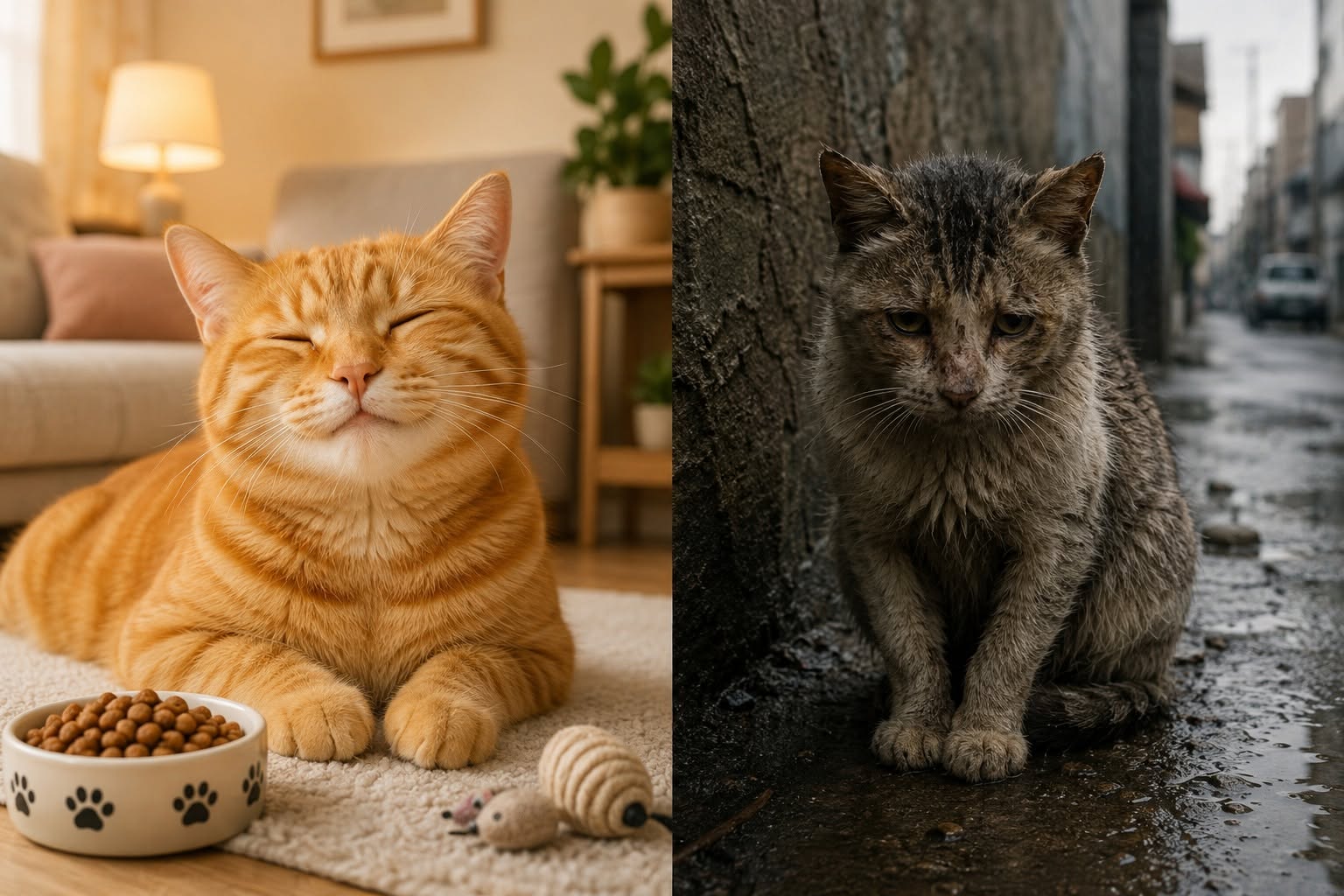
Indoor cats don’t just stay safer. They often live dramatically longer — and once you see the numbers, it’s hard to look at that front door the same way again.
Discover more
Pregnancy & Maternity
Online Image Galleries
Children
Consider the gap. An indoor cat typically lives twelve to eighteen years, and plenty sail well past that. An outdoor cat? The average is a heartbreaking two to five years. That’s not a rounding error. It’s the difference between a decade of shared mornings, sunlit windowsills, and quiet purring on your chest — and a life cut short before it ever really began.
For a long time, a certain myth has clung to cat ownership: the idea that cats need the outdoors to be truly happy, that keeping them inside is somehow a small cruelty. It’s an understandable belief. Cats are hunters, wanderers, creatures of instinct. But the science tells a different — and far more hopeful — story. The reason indoor cats live so much longer has nothing to do with the indoors being magical. It’s about what the outdoors quietly takes away.
What the Outdoors Really Costs a Cat
The moment a cat steps beyond your door, it enters a world that was never designed with its safety in mind. Each of the following is a genuine, well-documented threat — and together they explain that brutal difference in lifespan.
Infectious disease. Roaming cats trade far more than territory. Feline leukemia virus (FeLV), feline immunodeficiency virus (FIV), feline infectious peritonitis, and upper respiratory infections all spread through contact, bites, and shared spaces. FeLV and FIV in particular are serious, life-shortening illnesses passed between cats who fight or mingle outdoors — and they’re largely diseases of the outdoor population.
Predators and other animals. Depending on where you live, coyotes, foxes, birds of prey, loose dogs, and even other territorial cats pose a constant danger. A house cat has no pack, no backup, and often no realistic escape from a determined predator.
Toxins and poisons. The outside world is quietly laced with hazards: antifreeze (which cats find sweet and deadly), rodent baits, pesticides, herbicides, toxic plants, and contaminated water. A curious cat exploring a neighbor’s garage or garden can encounter any of these without warning.Desserts
Parasites. Fleas, ticks, ear mites, and intestinal worms are far more prevalent — and far harder to control — in cats who spend their days outside. Beyond the discomfort, some of these parasites carry diseases of their own.
Harsh weather and the elements. Extreme heat, freezing cold, storms, and simple exposure claim outdoor cats every year. Kittens, senior cats, and those without reliable shelter are especially vulnerable.
Getting lost, trapped, or stolen. Outdoor cats disappear. They get shut in sheds and garages, wander too far to find their way home, are picked up by strangers, or are injured somewhere their owner will never find them.
Look at that list together and the lifespan gap stops being mysterious. It isn’t that the outdoors makes cats unhappy. It’s that the outdoors is dangerous, and danger — day after day, year after year — adds up.
But Doesn’t a Cat Need to Roam?