A strong sulfur or rotten odor (the most reliable indicator)
Unusual discoloration in the yolk or white
A slimy or powdery texture on the shell or inside the egg
Cracked shells that show signs of contamination
Unusual mold growth
If an egg smells normal and appears fresh, the presence of a chalaza is never a cause for concern.
Frequently Asked Questions
What is the white string inside an egg?
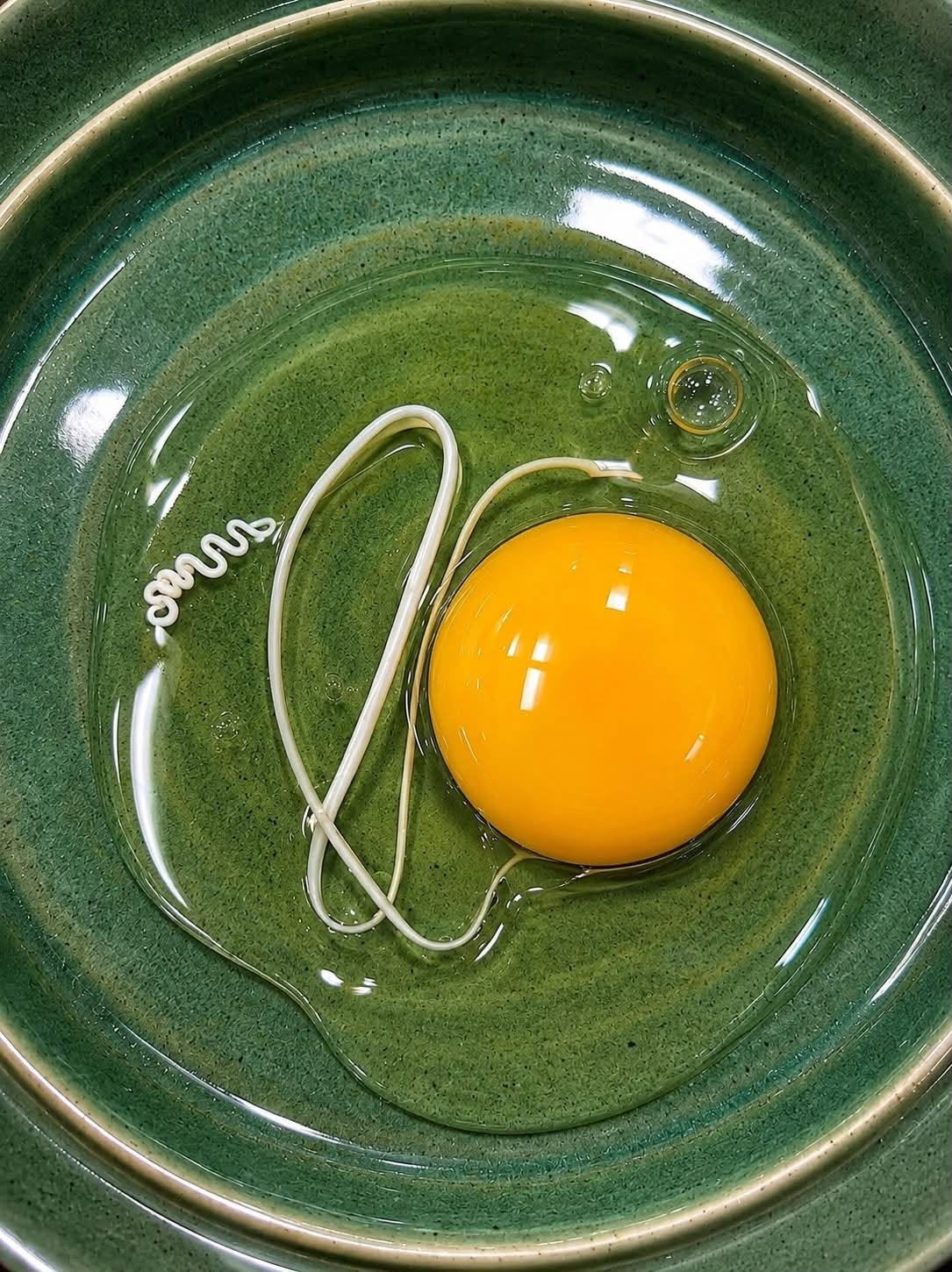
It is called the chalaza, a natural protein structure that acts as an anchor to keep the yolk centered.
Is the chalaza safe to eat?
Yes. It is completely edible, safe for consumption, and made of the same protein as the rest of the egg white.
Does a visible chalaza mean the egg is bad?
Quite the opposite. A prominent chalaza usually indicates that the egg is very fresh.
Should I remove the chalaza before cooking?
Removing it is entirely optional. Most home cooks leave it in place because it is harmless and cooks just like the rest of the egg.
Can the chalaza be mistaken for a parasite?