Is Your Kettle Safe? 4 Warning Signs You Should Never Ignore.
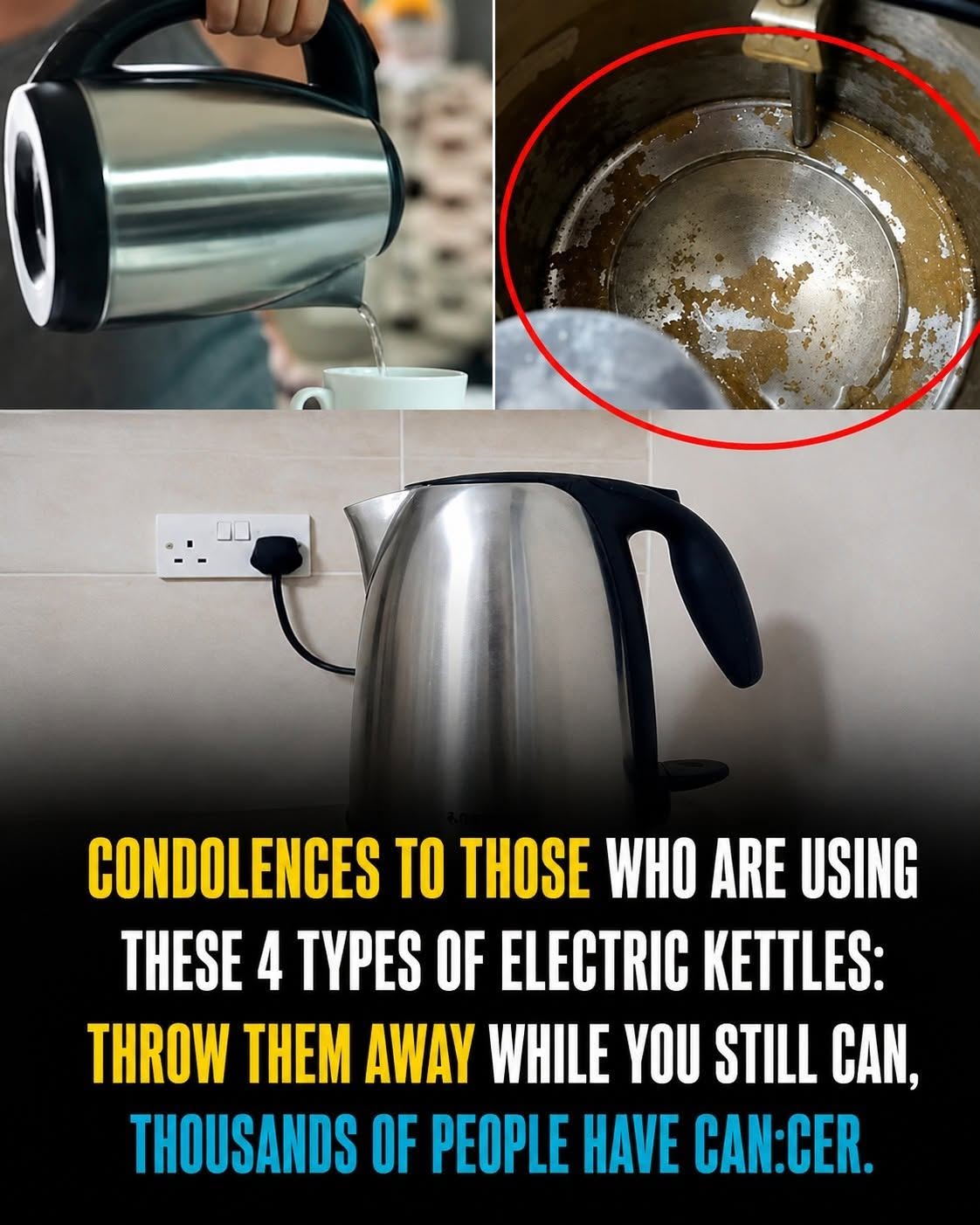
Condolences to Those Using These 4 Types of Electric Kettles: Throw Them Away While You Still Can—Thousands of People Have Already Developed Can.cer
A worn or low-quality electric kettle could expose you to hidden health risks.
Electric kettles are among the most commonly used kitchen appliances, making it easy to overlook the fact that not every kettle is equally safe. While a high-quality kettle can provide years of reliable service, damaged, poorly manufactured, or heavily worn models may release unwanted substances into the water you drink every day.
Although no single kettle directly causes cancer, experts agree that long-term exposure to certain harmful metals and industrial chemicals should be minimized whenever possible. Knowing what warning signs to watch for can help you replace unsafe appliances before they become a larger concern.
1. Rusty or Peeling Electric Kettles
One of the clearest warning signs is visible rust or peeling inside the kettle. If the protective inner coating begins to deteriorate, the exposed metal may corrode over time.
Rust itself isn’t always highly dangerous in tiny amounts, but corrosion can indicate that the kettle is breaking down. Depending on the materials used, degraded surfaces may release trace metals into boiling water.
Replace the kettle immediately if you notice:
Rust spots inside the kettle
Peeling inner coating
Pitted or damaged metal surfaces
Brown flakes floating in the water
2. Cheap Plastic Kettles That Deform When Heated
Some inexpensive kettles are made from poor-quality plastics that soften after repeated exposure to heat.
If plastic components are not designed for boiling temperatures, chemicals may migrate into hot water over time. A strong plastic smell, unusual taste, or visible deformation are warning signs that the kettle should no longer be used.
Watch for:
Plastic odor during boiling
Yellowing plastic
Soft or warped surfaces
Cracks around the heating area
3. Low-Grade Stainless Steel Kettles…